
Last week, the current U.S. administration changed the decades-long interpretation of a one-word phrase in the Endangered Species Act. The rule change ends a safeguard that has protected wildlife and their habitats for more than fifty years. By removing this long-standing protection, we are allowing for the destruction of the places endangered animals depend on for survival—and once those habitats are gone, the species that rely on them may never recover.
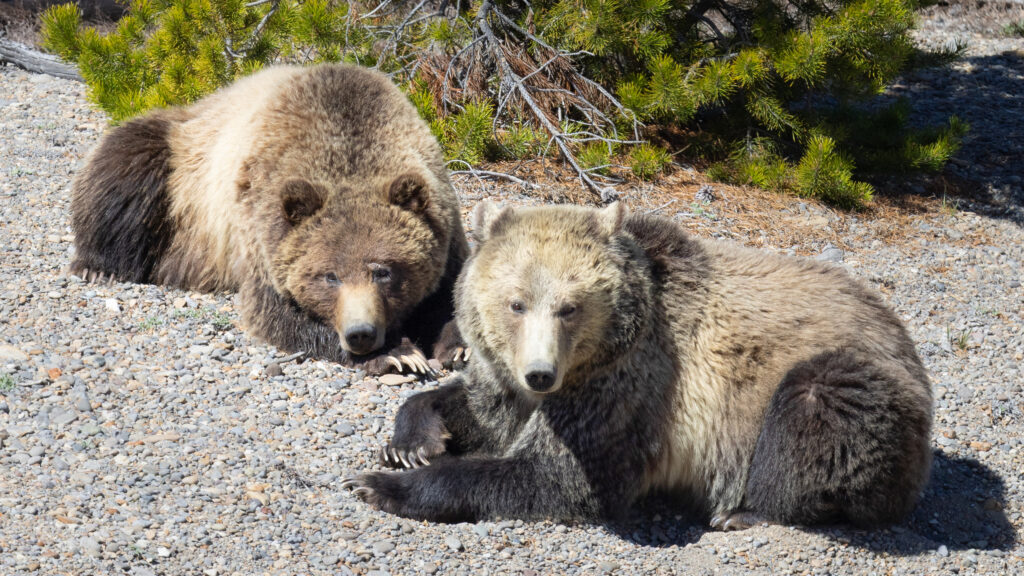
This past May, I sat along the shore of Yellowstone Lake in the Greater Yellowstone Ecosystem (GYE), watching a pair of grizzly bears during the breeding season. Moments like these are why I return year after year. As I watched them disappear into the forest, I found myself overwhelmed with gratitude that these bears still exist. That almost wasn’t the case. Had the Endangered Species Act (ESA) never become law in 1973, it is very likely we would not have grizzly bears in the Greater Yellowstone Ecosystem today.
In the early 1970s, only an estimated 130 to 200 grizzly bears remained in the Yellowstone area. Their decline was driven by hunting, poaching, habitat loss, and decades of human expansion. The ESA was enacted in 1973, and grizzlies in the lower 48 states gained federal protection in the summer of 1975 under the act. Hunting became illegal, habitat protections were established across large portions of Wyoming, Montana, and Idaho, and it became unlawful to “take” or “harm” the species under the Act.
Recovery was never going to happen quickly. Grizzly bears reproduce slowly; females don’t begin having cubs until they are several years old, and cub mortality remains high. Even under the best conditions and with strong protection, recovery takes decades.
Today, after more than fifty years of protection, the Greater Yellowstone Ecosystem supports approximately 1,000 grizzly bears. The population has recovered significantly, and the bears are still listed as threatened in the region. If you visit Yellowstone today, your chances of seeing a grizzly are remarkably good. This is one of the many great success stories of the Endangered Species Act.
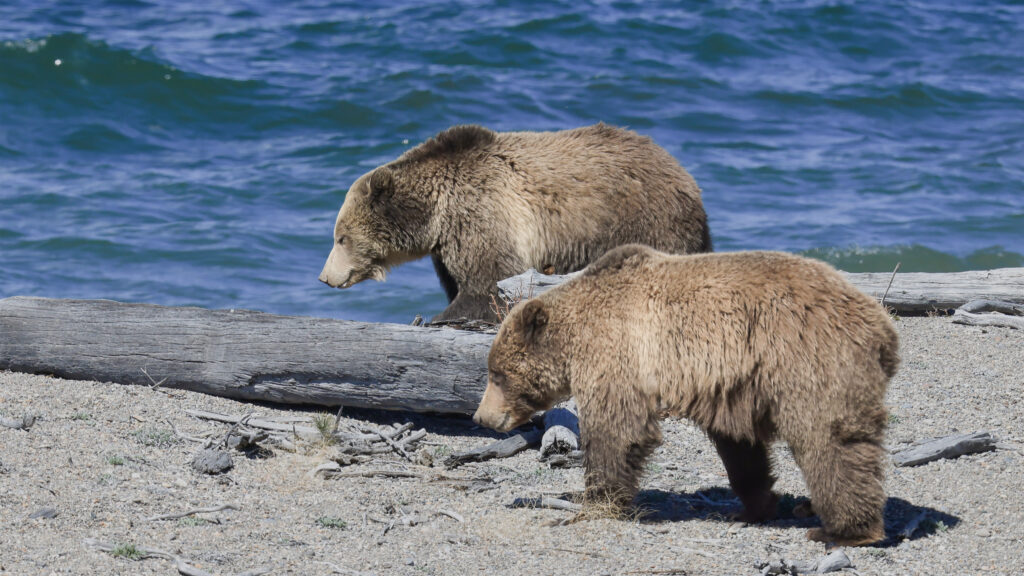
Grizzly bears are far from unique. Habitat loss is the single greatest threat facing most endangered and threatened species. Without habitat protections under the ESA, grizzlies would not have recovered in the Greater Yellowstone Ecosystem. Six species of sea turtles found in U.S. waters depend on protected beaches where they can nest to survive. Pacific salmon rely on healthy rivers and intact watersheds to complete their life cycle. The Northern Spotted Owl depends on mature forests for survival. The ESA has successfully protected all of these ecosystems and habitats.
For more than fifty years, regardless of which political party held the White House, our nation has largely recognized a simple truth: protecting wildlife means protecting the places where wildlife lives. Public support for the ESA has remained consistently high for decades. According to reporting by The New York Times, when the federal government proposed changing one of the law’s longstanding interpretations, approximately 220,000 public comments were submitted, with roughly 99 percent opposing the change. According to surveys done in past years, 84% of people approve of the ESA.
Despite the overwhelming public response and overall support, on July 10, 2026, the Departments of the Interior and Commerce finalized a rule that changed the regulatory definition of a single word in the ESA.
One word.
Harm.
The new rule removes habitat destruction from the regulatory definition of “harm.” Endangered species still cannot legally be injured or killed without authorization, but destroying or degrading the habitat they depend upon is no longer treated the same way under this regulation. The administration has said the change restores the law to what it considers the proper statutory meaning and reduces regulatory burdens on landowners and businesses. Conservation organizations and many wildlife scientists argue that the change weakens one of the ESA’s most important protections by allowing habitat destruction.
This represents a significant departure from decades of legal interpretation and will negatively impact our endangered and threatened wildlife. The historic interpretation of the law was solidified in 1995, when the U.S. Supreme Court ruled in Babbitt v. Sweet Home that habitat modification could constitute “harm” under the ESA because destroying habitat can ultimately kill wildlife by preventing animals from feeding, breeding, denning, or raising their young.
Rather than changing the law itself, which the highest court in our land upheld, the administration has now changed the regulatory definition of “harm.”
Why One Word Matters
Section 9 of the Endangered Species Act makes it unlawful to “take” endangered or threatened fish and wildlife. The Act defines “take” to include harassing, harming, pursuing, hunting, shooting, wounding, killing, trapping, capturing, or collecting protected animals. For decades, “harm” included habitat modification or destruction when it significantly impaired essential behaviors such as feeding, breeding, sheltering, or raising young. That interpretation reflected a basic biological reality.
Wildlife cannot survive without adequate habitat.
This is not simply an opinion held by conservationists. Habitat destruction and fragmentation are widely recognized by the U.S. Fish and Wildlife Service, the U.S. Geological Survey, and numerous scientific organizations as the leading drivers of biodiversity loss and species extinction.
Remove the habitat, and eventually you remove the species. That is precisely why habitat protection became one of the cornerstones of the Endangered Species Act.
As someone who spends countless hours photographing wildlife throughout the Greater Yellowstone Ecosystem, I find this change heartbreaking. These landscapes and waters are more than beautiful places. They are functioning ecosystems that have taken thousands of years to develop. They support grizzly bears, wolves, wolverines, lynx, salmon, owls, whales, turtles, and thousands of other species that depend upon intact habitat to survive.
Our children and grandchildren deserve the opportunity to experience these places as we have. Once habitats are fragmented or destroyed, they often cannot be restored. If you believe these protections are worth defending, now is the time to stay engaged. Organizations like Earthjustice are challenging the new rule in court. Consider a financial donation. You can also contact your elected representatives, participate in public comment periods, and help educate others about what is happening.
The pace of environmental policy changes under this administration can feel relentless. It is easy to become discouraged. But conservation has never been won through a single victory or lost through a single setback. The recovery of the Yellowstone grizzly bear took more than fifty years because people refused to give up. We cannot give up either.
To the extent possible under law, Brynn Alise Schmidt has waived all copyright and related or neighboring rights to the above article, The End of the Endangered Species Act As We Know It. “This work is published from Niwot, Colorado under a Creative Commons CC0 1.0 Universal Public Domain Dedication.
No attribution is required, but if you enjoy this work, mentioning the author or linking back to the original is always appreciated.