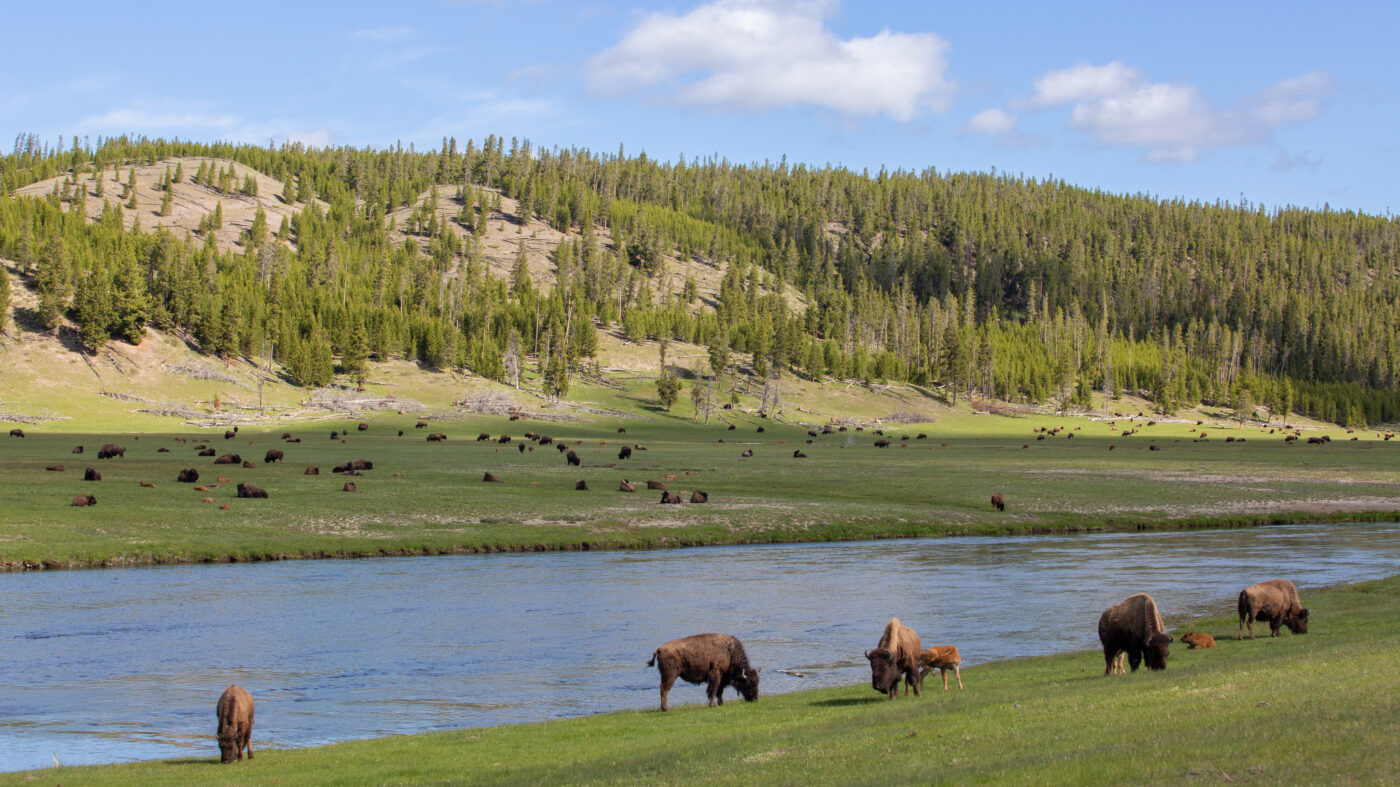
For thousands of years, the North American prairie and the American bison evolved together. Long before fences divided the grasslands, millions of bison moved across the Great Plains in an ancient rhythm, grazing, wallowing, fertilizing the soil, and carrying seeds across the landscape. They thundered across the prairie, shaping the earth beneath their hooves and sustaining an ecosystem unlike any other. Even today, to witness a wild bison moving freely across the grasslands is to catch a glimpse of the prairie as it once was. For thousands of years, the prairie and the buffalo existed as one. Everything changed during the final decades of the nineteenth century, when commercial hunting, westward expansion, and federal policies converged to drive the American bison to the brink of extinction.
The Historical Story
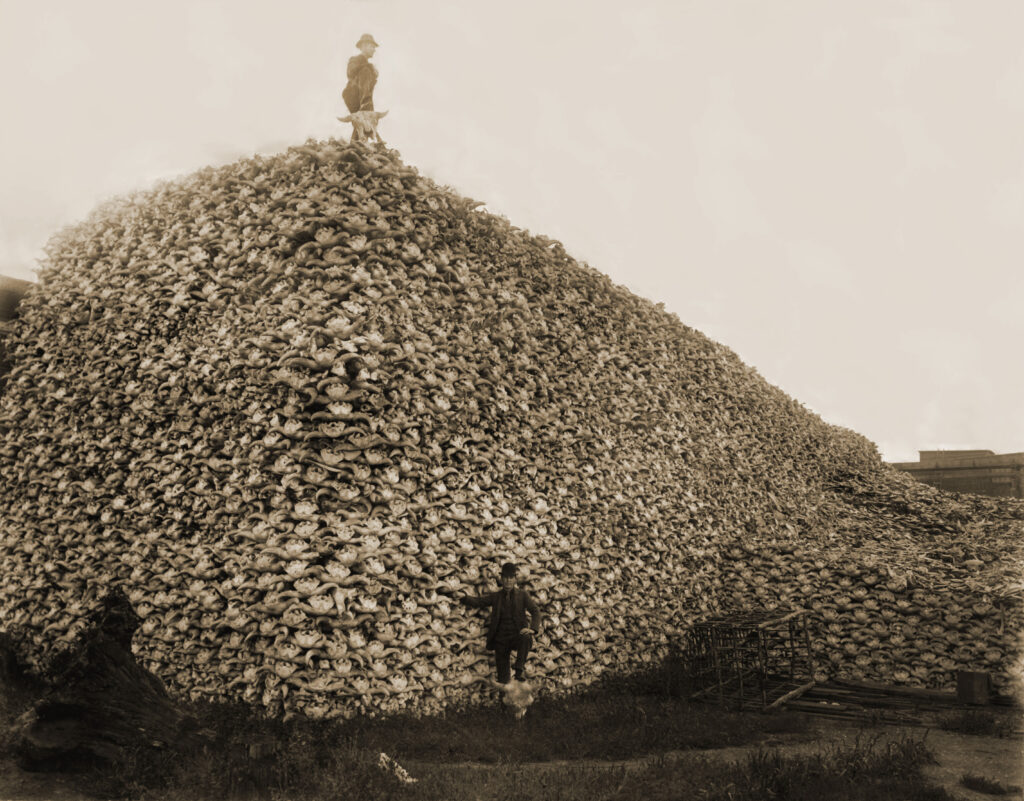
History remembers this period as “the Great Bison Slaughter.” The U.S. Army recognized that the destruction of bison would also deprive the Native nations of their primary source of food, clothing, shelter, and trade. They developed an extermination campaign, which was also joined by commercial hunters who drove the process for profit. The collapse of the great bison herds followed as planned, and this forced Native nations onto reservations and weakened their ability to resist westward expansion.
By 1883, the Great Bison Slaughter had largely run its course, not because hunters chose to stop, but because so few bison remained. From an estimated 30–60 million animals, fewer than 1,000 survived across North America. By 1902, only 23 wild bison remained in Yellowstone National Park, the last continuously free-ranging herd in the United States.
The Recovery Story
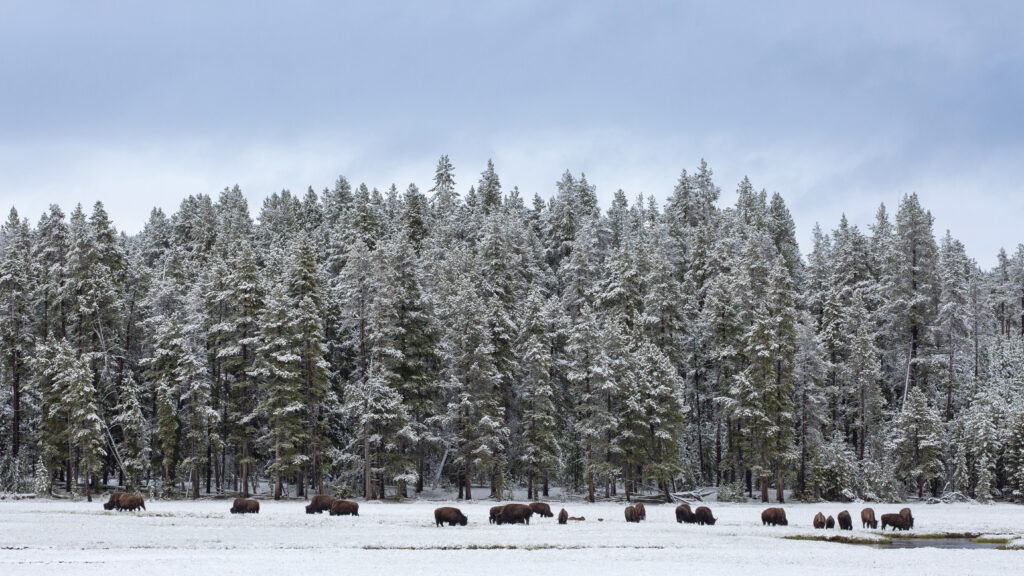
The recovery of the American bison is one of North America’s greatest conservation achievements because it belongs to no single person or institution. Native nations protected remnant herds, ranchers preserved private herds, Yellowstone safeguarded the last wild population, conservationists fought for legal protections, and the American Bison Society helped establish new herds across the country. Together, these efforts rescued the species from the brink of extinction.
Today, several organizations are leading efforts to restore bison not only as a species, but as a vital part of prairie ecosystems and Indigenous culture. In recent decades, Indigenous-led restoration has become one of the most important conservation movements in North America. Organizations like the InterTribal Buffalo Council have returned thousands of bison to Native lands. Non-profit organizations such as American Prairie and the Nature Conservancy are working toward creating more herds on public lands operated by the U.S. Fish and Wildlife Service and Bureau of Land Management. Private conservation groups such as Turner Ranch are also preserving genetically pure herds from Yellowstone.
Biodiversity and Bison Ecology
The return of the American bison is rightly celebrated as one of North America’s greatest conservation success stories. Yet the recovery is incomplete. Although hundreds of thousands of bison now exist, only a small fraction (approximately 10% of the entire population, roughly 20,000 to 25,000) live in conservation herds managed for their ecological role on the prairie. Most are raised in commercial operations, while the grasslands they once helped shape are now dominated by cattle. Today, bison are listed as “near threatened” and “ecologically extinct” which means they can no longer play their crucial role in shaping prairie biodiversity. They are considered by scientists to be a “keystone species,” meaning they are an animal that has an important role in the natural environment, in this case, the prairie grasslands.
Today, the temperate grasslands of North America are among the most altered and endangered ecosystems on Earth. Because the Great Bison Slaughter unfolded so rapidly during the late nineteenth century, scientists are still uncovering the full ecological role that vast, free-ranging bison herds once played across the prairie. What has become increasingly clear is that the American bison is a keystone species. Their grazing patterns, wallows (where they roll around in dirt or mud), migration, and nutrient cycling create a dynamic landscape that supports an extraordinary diversity of plants, insects, birds, and mammals. Restoring bison to the prairie is not simply about bringing back an iconic animal; it is about restoring ecological processes that shaped these grasslands for thousands of years.
One of the greatest challenges is that many of the public grasslands capable of supporting conservation herds are also used for livestock grazing. While cattle can be valuable in well-managed grassland systems, they do not replicate the ecological role of wild, free-ranging bison. Where cattle graze more uniformly across the landscape, bison graze more selectively, move continually across the landscape, create habitat through their wallows, and leave behind a rich mosaic of vegetation through their dung and the seeds they carry on their thick fur coat. This benefits countless other species.
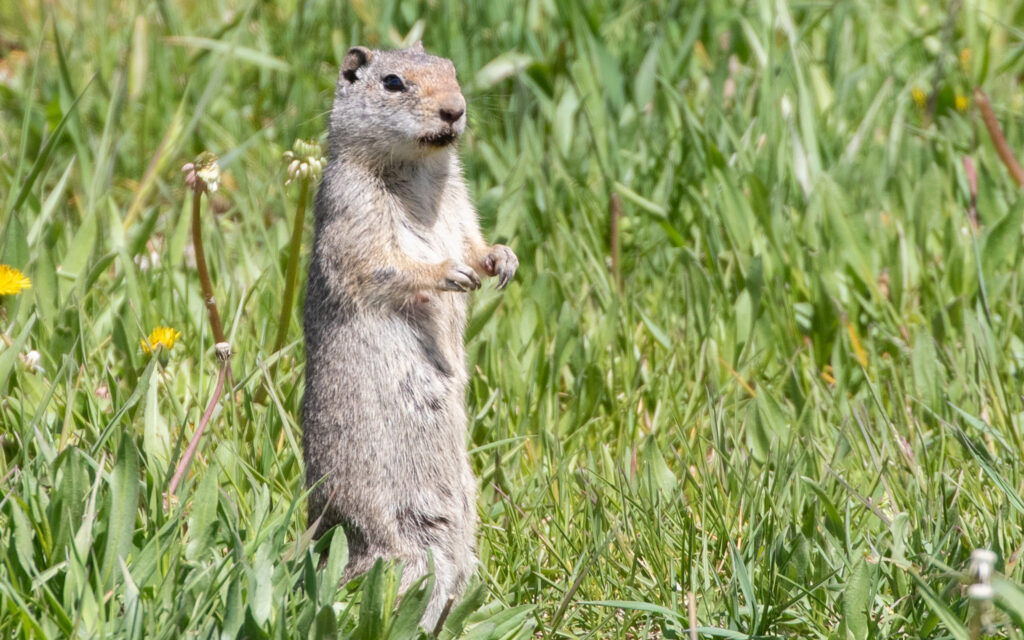
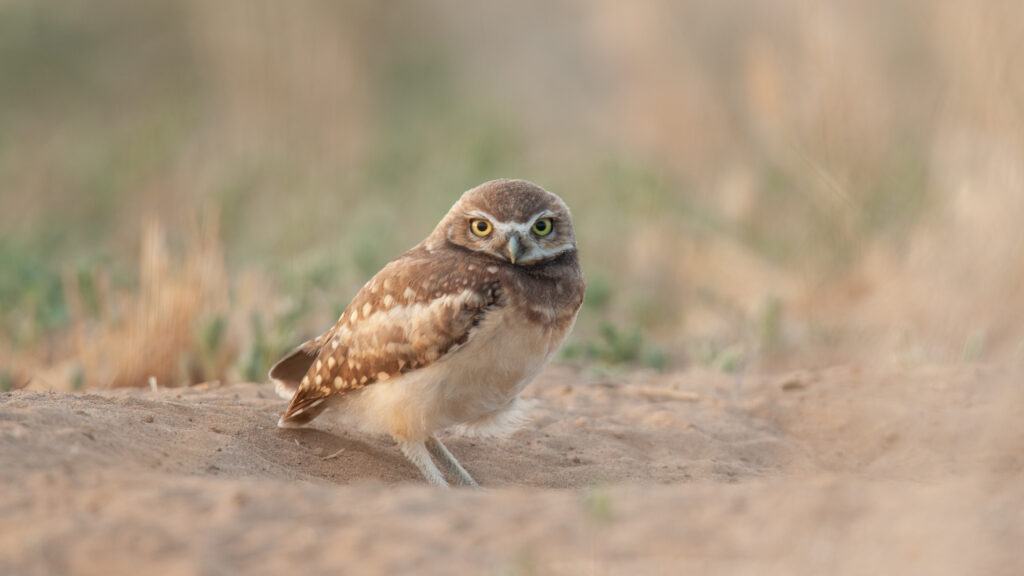
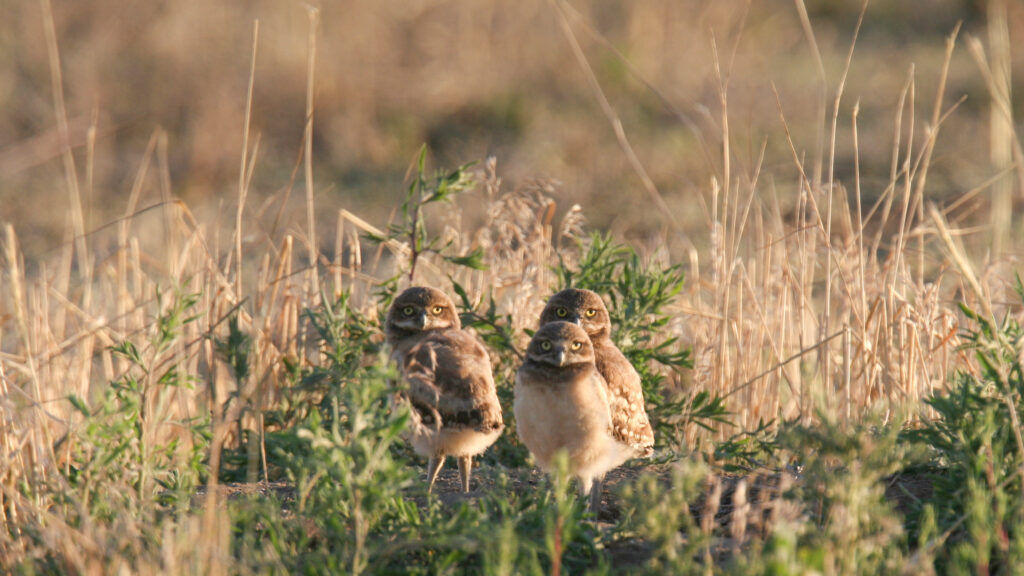
The prairie dogs that share these grasslands benefit from the presence of bison. Bison prefer taller grasses, often leaving behind the shorter vegetation that prairie dogs require to detect approaching predators. In turn, prairie dogs, themselves a keystone species, create open habitat used by one of North America’s most recognized grassland birds: the burrowing owl. These small owls nest in abandoned prairie dog burrows, relying on healthy prairie ecosystems where both prairie dogs and bison can thrive. According to the Gallatin Wildlife Association, prairie dogs have declined by 92–98% due to a combination of disease outbreaks, destruction of grassland habitat for farmland, and intensive government and private extermination efforts. According to Cornell Lab’s All About Birds, 50% of burrowing owls have been lost in the last 50 years as well.
The relationship extends even further. Meadowlarks, mountain plovers, killdeer, long-billed curlews, horned larks, and other grassland birds depend on the varied structure of vegetation created by bison grazing and prairie dogs. Dung beetles recycle bison manure, enriching the soil. Native grasses respond with new growth, feeding pollinators and other herbivores. Predators and scavengers, from wolves and coyotes to ravens and eagles, have long depended on bison as part of this intricate web of life.
*It is important to note that the scientific term used is bison, and the culturally correct term for Native nations is buffalo.
Current Management Issues
The debate surrounding bison restoration is not simply about one species. It is about how we choose to manage the remaining public grasslands of North America. Restoring bison to public grasslands remains a complex and often controversial issue. Many of the landscapes that once supported vast bison herds are now managed for livestock grazing, creating competing priorities for how these public lands are used. Ranchers, conservationists, Native nations, wildlife managers, and policymakers all have a stake in the future of these landscapes, and balancing those interests continues to be a significant challenge.
Ranchers depend on public grazing allotments for their livelihoods, and some have stewarded these landscapes for generations. However, bison have not been afforded this reality across the country. Conservationists and Native nations argue that this must happen to restore the ecological role of the American bison, which is essential to the long-term health of one of North America’s most endangered ecosystems. At this time, there are bison herds on public lands managed by the U.S. Department of the Interior, Bureau of Land Management, and national parks, as well as herds on private land, Native reservations, and additional federal land, as well as some lands overseen by non-profit groups.
The current administration recently revoked grazing licenses for one of the larger herds managed by the non-profit organization American Prairie in Montana, in favor of more cattle grazing on public lands. They have been given until September 30th to remove 1,000 from BLM land. Both American Prairie and Western Watersheds Project (with the legal assistance of the Western Environmental Law Center) have sued the administration to prevent this. Native nation groups have also sent protest letters to accompany the lawsuits. Conservation groups and Native nations continue the effort to protect bison and educate others on the importance they play in our grassland ecosystems.
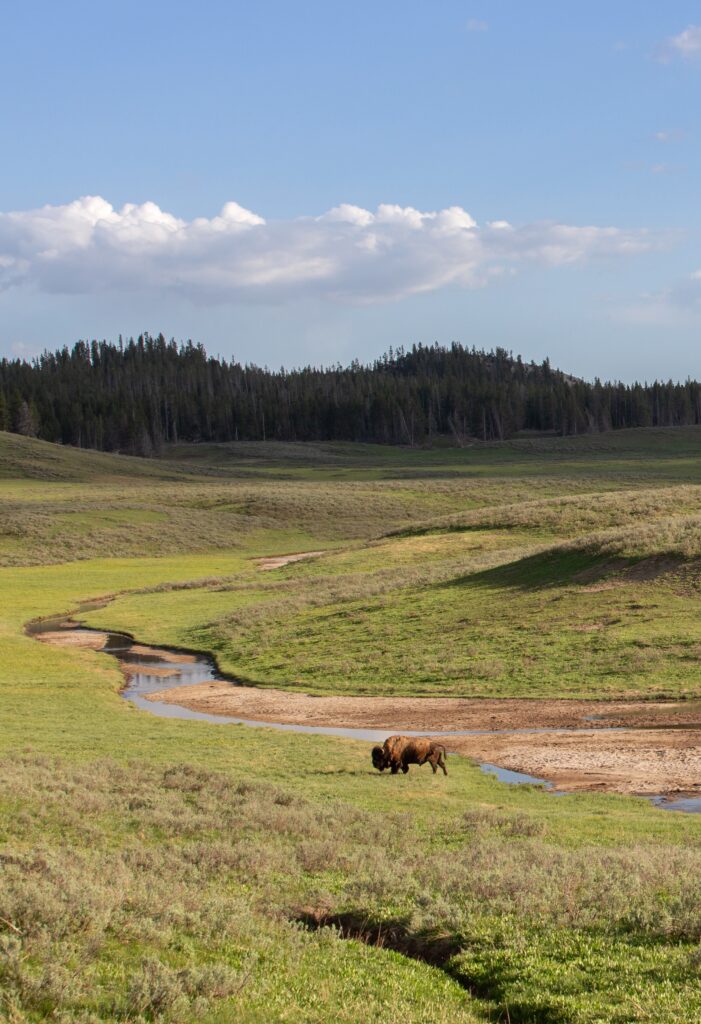
The American bison is more than a symbol of the West. Bison are known as an integral species that promotes health, diversity, and resilience of one of the world’s most endangered ecosystems. Today, the American bison once again roam small parts of the prairie they helped shape for thousands of years. Their return reminds us that conservation is not only about preventing loss; it is also about restoring relationships. Every herd that returns to the grasslands is another step toward healing one of North America’s greatest ecosystems. Whether future generations inherit functioning grasslands or fragmented remnants will depend on the choices we make today, not only for the bison, but for the countless species whose lives remain connected to them.
What Can You Do
- One of the most valuable things you can do is educate yourself on bison recovery and the importance they play in restoring our grassland ecosystems, along with the crucial role Native nations played and continue to play in this conservation movement. Education is often the first step toward conservation. I recommend starting with American Prairie and The Bison Range. The “about” page on the Bison Range recounts the story of a Ql̓ispé man named Little Falcon Robe who rescued orphaned bison calves and brought them over the continental divide to the Flathead Indian Reservation, and how descendants of these calves helped repopulate the historic Yellowstone herd.
- Learn about how Native nations have preserved the bison over the centuries and the current work they are doing to restore bison to their lands through The Bison Range, Intertribal Buffalo Council, The Tanka Fund, and others
- Donate to conservation groups focused on the management, protection and reintroduction of bison, such as the ones above and American Prairie, The Nature Conservancy (one of the largest stewards of bison, overseeing over 12 preserves to help restore native grasslands), and Western Environmental Law Center
- Educate yourself on brucellosis, which is a major concern among ranchers as it is a disease that can pass between cattle and bison. However, there are no documented cases of this, and cattle initially introduced this disease to wild animals. Billions of dollars have been spent managing bison herds that leave Yellowstone in winter to keep them from interacting with cattle. Again, education can help us understand facts and arguments.
Research for this article comes from the following sites and webinars.
- Gallatin Wildlife Association webinar, April 8, 2026
- Western Environmental Law Center webinar, July 29, 2026
The fight to Keep Bison on Public Land - Intertribal Buffalo Council
- The Nature Conservancy
- American Prairie
- Turner Ranch Outfitting
- Tanka Fund
- Gallatin Wildlife Association
- Daily Montanan
- National Park Service
To the extent possible under law, Brynn Alise Schmidt has waived all copyright and related or neighboring rights to the above article, “Who Speaks for the Bison,” and all images used within. Her husband, Eric Schmidt, has waived all copyright and related or neighboring rights to the burrowing owl images. This work is published from Niwot, Colorado under a Creative Commons CC0 1.0 Universal Public Domain Dedication. No attribution is required, but if you enjoy this work, mentioning the author or linking back to the original is always appreciated.